03 January 2008
la musica calabrese
(calabrian folk music)

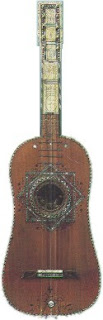
chitarra battenteOne of my favorite parts about living here is that you never know when you'll be caught up in an impromptu concerto. Seriously.

Now I'm sure some of you are thinking "Ah there goes another one of those stereotypes of 'la dolce vita' that simply doesn't exist in real life Italy."

Well I'm here to tell you that in small town Calabria, most males of all ages seem to play the guitar and will gladly break it out and start singing--especially the later into the evening it gets (and the more grappa that is flowing). And for those of you reading this who have visited here, chances are you can back me up on this.

In other words, we may miss out on a lot of "conveniences" down here, but at least we have la musica.

In fact the other night at New Year's Eve dinner, one of the younger boys who is just learning to play the chitarra battente (pictured at left) asked for some advice from Mimmo, our host and lead singer/guitar player of Marasà, a local band that performs traditional Calabrese music with a bit of an updated twist.

I just love how generation after generation picks up these songs and instruments with pride, keeping the tradition going, not feeling embarrassed or shy in the least as they sing along (loudly) when the guitar shows up.

For anyone who thinks that Calabrese music and Calabrese in general is dying out, here's a short clip of Mimmo encouraging yet another Calabrese boy on how to play the traditional way:


Although Italian musical heritage goes back centuries, including the famous chants of the Gregorian monks, Calabrian music has its own unique tradition and is rooted in songs about peasant life in the feudal system and all it entails--sung in Calabrese accompanied by Calabrian instruments.

It is music of the people, by the people, for the people, so to speak, and tells stories of both hope and hopelessness--common conflicting emotions for many Calabresi throughout the centuries.

Traditional Calabrian folk music has some common elements: high, strong vocals, a catchy, nearly hypnotic rhythm, and a bittersweet raw passion with any combination of tambourine, guitar, chitarra battente, accordion, zampogna (bagpipes), lira, mandolin, drums and more. The song rhythm you'll hear often is the tarantella, a traditional southern Italian folk dance that was performed by female victims of spider bites to rid themselves of the venom.

There's a great description of Calabrian music heritage here if you're interested, but I think George Gissing sums it up pretty well in his 1901 travel memoir:


Listen to a Calabrian peasant singing as he follows his oxen along the furrow,
or as he shakes the branches of his olive tree.
That wailing voice amid the ancient silence,

that long lament solacing ill-rewarded toil,

comes from the heart of Italy herself,

and wakes the memory of mankind.

For me, there's just nothing like that distinct Calabrese cry accompanied by the chitarra battente to take me back to when my ancestors walked these same streets, living much simpler yet much harder lives, imagining what they could offer their families if only they could get to l'America.

Goodness I wish I could go back and tell them.

You can hear more of Marasà here by clicking on "il disco" and then choosing songs. My favorites are Aquila bella, Canto ad aria, and Facci di n'ammendula and if you like bagpipes, be sure to check out A Nuziata.

If you'd like to order a Marasà CD of your very own, you know where to find me.

Labels: , , , ,


01 January 2008
buon anno!

Wishing everyone . . .


Happy New Year, Cherubs at Moon
May 2008 be your best year yet!

And remember, don't eat chicken today
or you'll be scratching (for money) all year . . .
pork (to live high on the hog) and
lentils (shaped like coins)
are the way to go!


Labels: ,


10 December 2007
Claiming Italian Citizenship "Jure Sanguinis":
How I Became Legal in Italy

A while back when I asked you for questions to help me fill out a meme, Robin of My Melange asked
if I’m legal here in Italy, whether I have always been, and what that process has been like for me.

Excellent question!

First let me say that I *am* legal. I have dual American/Italian citizenship in fact, and yes, I will explain.


For those who don’t know, an American citizen can stay in Italy legally for up to three months without any kind of visa or stay permit--although do check for most recent regulations if you’re planning on coming as they change often.

Your local Italian consulate or embassy is the best bet for this information. Generally, though, if you're just coming on vacation, you don't have anything to worry about. Citizens of other countries should check laws specific to them as rules differ greatly depending on home country.

Italian and American flagsI am lucky to have qualified for Italian citizenship through my family’s Italian bloodline, which is known as jure sanguinis or jus sanguinis, i.e., the law of the blood.

There are many complicated, sometimes counterintuitive rules to determine whether you qualify, which you can read more about here, but essentially, you must trace an unbroken line (no renouncement or loss of Italian citizenship) back to the last ancestor who was registered as a citizen in Italy, often the last ancestor who lived here.

For me, it was my great-grandfather, and it wasn’t an easy process for me to gather all the required documents, including marriage, birth, and death certificates for everyone in the line of Italian heritage (my great-grandfather, grandmother, father, me).

My biggest hurdle was that my great-grandfather had changed his last name without even telling anyone, so it took some digging to first find the correct last name before I could gather documents. Needless to say, my great-aunt was surprised to find out her real last name after nearly 80 years of the changed version. Ellis Island's passenger records search was an invaluable resource to me during this part of the process.

And, on the extremely bright side, because my great-grandfather had lost his alien registration card around the time of World War II, I got to see a photo of him for the first time from the government's records when I requested records to confirm that he had never become a US citizen; there was also a photocopy of the original letter requesting the new card in my great-aunt's handwriting in the file, which was pretty cool to see as well.

After that, getting everything in order wasn’t too difficult--just a lot of writing and phoning to Vital Records departments across a couple of states and communicating with one comune in Italy, which doesn't happen to be the one I live in.

One of the rules you need to watch out for in determining eligibility is the fact that women couldn't pass on Italian citizenship until January 1, 1948, which means that I couldn't go through my great-grandmother, who was born in 1898 about ten minutes from where I live. Oh no. Instead I had to go through her husband, my great-grandfather, who came from a small village in Campania, several hours north of here.

Luck was on my side, though, when my father was born just three months after the 1948 date--had he been born in 1947, I wouldn't have been eligible for Italian citizenship at all as my grandmother is the only Italian line I could follow. Indeed, my aunt, who was born five years before my dad, is *not* eligible for Italian citizenship and neither are her children.

See what I mean about complicated rules?

After much paperwork gathering, I was finally ready to apply to have my citizenship recognized in April of 2004 in Philadelphia, which I did with my dad (at the time, they told me that he had to apply too but the consulates seem to have changed that requirement), and then I came back to Italy. I had already been here for a six-month stint before that and had only gone back to America to finalize things to stay here more permanently.

So after I was back in the Bel Paese beyond three months, technically, I was illegal here, but I always figured that if I happened to get stopped by the carabinieri, I could talk my way around things without much difficulty. This did, in fact, happen, after I had been here already for two years--not that I'm encouraging anyone else to follow my footsteps! I'm just reporting events as they happened.

Note that had all of this been taking place now, though, there are provisions in place for someone like me to be here legally until the process is finished; now you can get a special stay permit while waiting for the recognition of Italian citizenship jure sanguinis (permesso di soggiorno in attesa di cittadinanza).

As far as I know, for this permit to apply, though, you must apply in Italy, but an even further upside to applying in Italy is that you will most likely cut out a lot of the wait often encountered in US consulates, which can be several years long (my father's wait was only one year and mine was just two, but many more applications have been filed since 2004). Whether you can legally work or not with this permit, though, seems to vary, so that's definitely something you want to check on.

If you are interested in coming to Italy to apply for recognition of Italian citizenship jure sanguinis, I highly suggest looking for more information on the Expats in Italy forum as several members have gone through this and are always willing to answer questions.

So my Italian citizenship was finalized in September 2006, and now I have dual American and Italian citizenship, which means I can vote in Italian and European Union elections, live, work, and travel freely in the EU, and enjoy all of the responsibilities and privileges of any Italian citizen without losing my American citizenship--including a pension from each country when I retire assuming I pay into each system (and I do) and that either of them have any money left when that time comes (boh).

If you're wondering about the United States' position on dual citizenship, read about it here. Again, if you're not American, please investigate your country's policy on dual citizenship before pursuing anything.

A lot of people ask about the negatives of dual American/Italian citizenship; the only potential downside I've found is that one *could* be denied security clearance if desiring to work for one government or the other; this would be on a case-by-case determination.

And that's how I became legal in Italy and had my Italian citizenship jure sanguinis recognized.

For me, pursuing dual American/Italian citizenship has been one of the best decisions I've ever made, and if I can help anyone along in this process, I'm more than willing. So
if you have questions on your particular situation, please feel free to email me (address in sidebar).

Viva l'Italia--e l'America!

Labels: ,


07 December 2007
a word on grappa

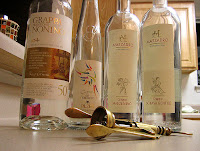
a glass of tasty grappa by Laenulfean on FlickrIn Wednesday's Sweet Apple Omelet recipe from Gina DePalma's fabulous Dolce Italiano, a little thing called "grappa" was one of the ingredients -- and one that I omitted.

Probably because I singled it out, there ended up being quite a bit of discussion in the comments about this uniquely Italian creation -- questions that can be summarized as "What is grappa?", "Why would you use grappa in desserts?" and "Does Gina have a particular fondness for it as it appears in quite a few Dolce Italiano recipes?"

Since there is some mystery surrounding this peculiar clear bevanda, today we're talking grappa, and our source will be none other than Gina DePalma, who was more than happy to answer questions about its use in her recipes.

But first--what is it?

We needn't go further than Dolce Italiano for the answer. Have I mentioned that beyond a fabulous collection of recipes, Gina also offers an amazing amount of information on Italy, festivals and celebratory foods, the Italian language, and baking equipment and techniques?

You can also learn the history of gelato, why you should always toast nuts before using them, how to test your oven's prowess, and how to substitute different egg sizes in recipes.

And so much more!

In a section called "Ten Italian Ingredients You Should Know," Gina writes about "the building blocks of [her] dessert repertoire." These are the essential items in her pantry at Babbo, she says, and grappa is on that list.

From Dolce Italiano:

An aquavite, or "water of life," grappa is made by distilling grape skins and grape pomace, and this characteristic distinguishes it from other distillates made from wine or fruit....Grape pomace is essentially the leftovers of the winemaking process--the skins, pulp, and seeds. The pomace is heated in a still to produce an alcoholic mixture, which is distilled to remove the solids along with water, impurities, methyl alcohol, and any other volatile substances. The grappa is then carefully aged in a multistep process, which ends with a final reduction of alcohol and cold-filtering. Skilled, traditional grappa distillers produce a drink that is filled with nuance and flavor.

As every region produces wine, every region also produces grappa, but it is the northern versions that get the most accolades, particularly those from Friuli-Venezia Giulia and the Veneto.

Which brings us to the Sweet Apple Omelet. As Gina pointed out in her email to me, the recipe
itself comes from Friuli, and so grappa was a perfectly logical and tasty addition to it.

Grappa by Saintbridge on FlickrBut in general, Gina notes, "lots of pastry recipes--not just Italian--use spirits and distillates. Rum, brandy, framboise, even whiskey. Booze is there more than people realize, especially in European-style pastry."

I can certainly attest to that last part as sometimes it's difficult to find a dessert here that *doesn't* have some kind of alcohol in it--it's even in children's snacks! Here in the south where I am, grappa isn't usually the addition of choice but there is a lot of rum, brandy, anisette, and even vincotto. All tasty to be sure.

So why would you use grappa in a dessert recipe? From the book, Gina says that that "a truly fine grappa will accent and improve whatever flavor is highlighted on the plate." She particularly likes using grappa in fresh fruit desserts and says that it is "heavenly when added to a crepe batter or lightly sweetened whipped cream."

And about her allegedly using excessive amounts of grappa in the recipes?

"I think I use a good variety in the book--rum, amaretto, and grappa, mostly. I think that Americans see grappa as an unusual ingredient, and the recipes that use it have gotten more than their fair share of attention. But first and foremost, I use grappa in the recipes where it fits, either regionally, or because I think the flavor works really well."

So there you have it.

Now you know a little more about the mystical grappa, why Gina uses it, and why you should too.

I do want to be clear that I didn't use grappa in the Sweet Apple Omelet because I didn't have any. I was sick over the weekend when I needed to shop for ingredients, and since I wasn't going outside, this meant no grappa-shopping either.

Related to that, even if I could've gotten my hands on some grappa (surely one of my neighbors has a stash, although it might be peperoncino-flavored!), my recovering stomach was certainly not up for even the smell of it. Or at least I didn't want to risk it.

Next time I make the Sweet Apple Omelet though, I will certainly give the grappa a try in there. I trust Gina.

And now my mom does too because she just received her Christmas gift from me in the mail yesterday--her very own copy of Dolce Italiano! The mailman actually delivered it *while* I was on the phone with her.

It's just the most wonderful time of the year, isn't it?

P.S. Remember that today is the last day in the Dolce Italiano Contest so head over to Jenn's The Leftover Queen for the final recipe. And if you want to comment on that post or the previous nine recipe posts (you can comment on all of them once for a total of 10 chances to win), do so by

11:59 p.m. PST, DECEMBER 7--TONIGHT!!

in order to enter the drawing to win a personalized, signed copy of Dolce Italiano by Gina DePalma.

Here are the previous recipe posts:

Mosaic Biscotti & Sicilian Pistachio Cookies, Sara's Ms Adventures in Italy

Chocolate Kisses & Cassata alla Siciliana, Ilva's Lucullian Delights

Ricotta Pound Cake & Sweet Apple Omelet, here!

Chestnut Brownies & Chocolate & Tangerine Semifreddo, Shelley's At Home in Rome

Chocolate Salami, Jenn's The Leftover Queen

Best of luck and buon weekend!

Labels: , , ,


13 November 2007
time for reflection

Ah the joys of living in small town southern Italy.

I called Telecom Italia again last night and now before they’ll even connect me with a real person, there’s a recording to remind me that they told me it’d be fixed by “next” Wednesday. (I’m just going to keep believing that they really mean the Wednesday that’s coming tomorrow.)

Um, no they didn’t tell me that, but it was somewhat comforting to know that they’re at least on the case. So I went to talk to one of only four other people in the village who have ADSL to see what he knew.

While I was in there, another of the Lucky Five came in and here’s a paraphrased snippet of the conversation between the two Italians:


Disgruntled Customer #1: So it’s been out for a few days now.


Disgruntled Customer #2: Yes, they’re working on the cables.

#1: I saw that, but I worked on a ship for 30 years. When fixing cables, they put in the new ones *then* take out the old so there’s no interruption of service.


#2: Yes…but we’re in Italy.

And that about sums it up kiddos.

On the bright side, they say that this will give us increased speed once the cables are in--nice since we’re still nowhere near even the speed we were promised when we signed up (we run at about a third of that on a good day).


But on the not-so-bright side, I probably won’t be able to keep up this routine of running to the internet café (yes, it's a real one with coffee and everything!) every day (a three and a half hour journey because of the bus schedule), so I don’t know where that’ll leave us NaBloPoMo-wise.


Plus, did I mention the computers at the café move ridiculously slowly? I’ve had trouble even viewing my blog, so please excuse any weird-looking things going on. And I hope it’s just that those computers are set for strange color tones or something because my blog is so not supposed to be nearly-iridescent yellow on the sides. Ew.

30 days of thanks

Today I’m thankful for:

The fact that I can even have these stresses in my life. Sometimes it takes frustrations like this for me to realize just how lucky I am to wake up healthy with a roof over my head, food in the fridge, and loved ones similarly lucky all over the world. I even have two dogs and six puppies to cheer me up when need be.

Sometimes a little down time is needed to really stop and appreciate the basics.

A little time for reflection if you will:

reflection, calabria, southern italy

Labels: , , ,


08 November 2007
murder and xenophobia:
troubled times in italy

[UPDATED AS NOTED BELOW]

I don't know even know where to begin to write this post and I don't know where it'll end up, but I feel like I should so here it goes. I hope you'll stick with me.

The murder of 21-year-old British exchange student Meredith Kercher in Perugia has thoroughly shaken Italy and England, judging from the coverage it has gotten in British press. And rightfully so. A murder is always horrible, but in this case, the suspects make it even more troublesome--especially as none appear to have had any history of violence.


Kercher was stabbed in the neck after, police say, she resisted a sexual attack that in some way involved her American roommate, 20-year-old Amanda Knox, a student at the University of Washington also studying abroad, Knox's Italian boyfriend Raffaele Sollecito, a 24-year-old son of a urologist from Bari, and Patrick Lumumba, a 37-year-old married Congolese immigrant who runs the bar where Knox worked.

The details are murky at this point, but it's been widely reported that Knox "confessed" to having some role in the killing; from statements leaked by Italian police, Knox said that while Kercher and Lumumba were in Kercher's room, she stayed in the kitchen and covered her ears when she heard what were surely Kercher's last screams. Sollecito's statements have been all over the place, but he insists that he was at home the night of the murder.

[EDITED: Thanks to information from Steve Huff of The True Crime Weblog, Lumumba apparently now says he has an alibi and wasn't even at the scene of the crime, making this an even stranger story.]

What it sounds like to me is that these three are telling conflicting stories and no one really knows what to believe. It looks like we'll just have to wait this one out, possibly for forensic evidence to tell the what really happened.

And while we mourn the loss of Kercher, who was studying at Perugia's famous Università per Stranieri (just as our own Tina of Pecorino e Miele did), there is another fascinating aspect to this case from a cultural standpoint--the focus on the online presence of Knox.

Like many her age, Knox kept a MySpace (username "Foxy Knoxy") and Facebook page, and there's also a YouTube video of a drunk Knox slurring her words, and, well, being a young adult. Particularly interesting, though, is that on her MySpace blog, Knox apparently wrote a story about rape.

[EDITED: Courtesy of Steve Huff's blog, you can find "mirrors" of Knox's MySpace page here and of her blog here; both of the original pages have been made private.]

So here's another question in all of this--how much should this online information matter? I'm not talking about from a legal perspective, but in the court of public opinion, is this fair? Is anything you put online fair game? Should it be?

The Seattle Post-Intelligencer has a great debate on this very subject: "Are we being fair?"

For me, I think if you put the information out there, you can't stop people from looking unless you make it private. You also can't control their opinions. Would I want to live my life censoring myself just on the off chance that one day something could be used against me? Well geez, just about anything can be taken out of context anyway, so even censoring myself wouldn't be foolproof.

Drunk videos? Well that's something else entirely. I say if you'd be embarrassed for your mom, dad, employer, insert other authority figure here to see it, don't post it. But teenagers (and adults!) don't often think that far ahead, do they? But they should.

A short story about rape? I'm a writer, so should I avoid touchy subjects just in case I'm ever in the wrong place at the wrong time (not insinuating this is what happened to Knox)? Well that I can't accept.

It's an interesting question, and I'd love to know what you think.

Now, shifting gears, but still taking off from the Kelcher murder--on the Italian side of things, one can't miss the irony that right now on the heels of a murder allegedly committed by a Romanian immigrant from the Roma ("gypsy") community, Italian lawmakers would like to be able to expel any dangerous EU citizen, although the targets are clearly immigrants from new EU members like Romania.

Read what other terrible things have happened, including a Roma camp being torn down and a mob attack, here.

Just yesterday, Italian and Romanian leaders met to ask for help from the EU in dealing with large population movements, but only time will tell just how xenophobic Italy can and will get. For many of us in the expat community particularly, we've noted how poorly immigrants are portrayed in the Italian media--often the only crimes you'll see on a newscast are those committed by foreigners.

And by "foreigners," I mean mostly Albanians, Romanians, and Africans.

Maybe it's something about coming from countries such as the United States, England, Australia, etc., that have, after many struggles, (mostly) embraced immigrants, but for a lot of us, all we're seeing is prejudice and hate. To be sure, all of the above-mentioned countries have immigration issues too, but what's happening now in Italy is so deeply disturbing, and I don't think I'm alone in feeling this.

There are ways of regulating immigration without resorting to sweeping generalizations about countries and their citizens, and I can only hope that the Italian government will explore them.

Virtually every ethnicity/race that has entered a foreign country has encountered prejudice and worse--we Americans don't need to go too far into our history to stare the Jim Crow South in the face--but for Italians, for my adopted country, to participate in similar behavior just breaks my heart.

And I can't help but think of the 11 Italians who were lynched in New Orleans in 1891 in one of America's largest mass lynchings--after they had been acquitted of the murder of the New Orleans' police commissioner.

And I just wonder where the prejudice and hate will stop.

30 days of thanks
Today I'm thankful for:

The safety and well-being of myself and my loved ones.

There's nothing I'm more thankful for, in fact.

Labels: , , ,


01 October 2007
if the shoe fits...
you're not an italian policewoman

italian policewomen in shoes that fitWhen Italy's Interior Ministry decided it was time to spruce up the uniform of the 14,750 women police officers (for more on the numerous branches of Italian police, head over to Mental Mosaic), they did what many of us do in a fashion crisis.

They bought new shoes--with higher heels for a "younger and sexier look" according to La Stampa.

Trying to save money, though, the government bypassed all the world-renowned (but expensive) Italian shoemakers and went with a company from Romania.

Unfortunately, when the shoes arrived, they weren't in standard European sizes, so the shoes didn't fit.

Which means a lot of useless shoes.

Oops.

You think they'll give the Italian government its money back?

Floor's open to your comments on whatever leaps out at you. Stomp away.

Labels: , ,


29 September 2007
what's happening in italy?

Oh a lot, amici miei.

Let's start from the most serious and head down to the downright silly:


(1) Italian Premier Romano Prodi has called for a worldwide moratorium on the death penalty in front of the United Nations General Assembly. Without getting into a huge political debate (although you're welcome to do so in the comments!), I'm firmly against the death penalty, and I'm molto fiera that Italy has stood up against it in the UN.

Of course the United States will be one of the key opponents of the moratorium, but Italian Foreign Minister Massimo D'Alema thinks it has a good shot at passing since public opinion has shifted over the years in favor of outlawing the death penalty.

Time will tell, but I'm just happy that the discussion is on the floor and that Italy is in the forefront.


dead man walking by sister helen prejeanIn related news, just this week, my blogging buddy over at Piacere wrote a great review of the book Dead Man Walking: An Eyewitness Account of the Death Penalty in the United States by Sister Helen Prejean as part of S.M.S. Books: Book to Movie Challenge and also linked to a website that continues to give updates to facts and figures in the book.

Perhaps you've seen the movie (I haven't), but it seems that the book is well worth a look too.

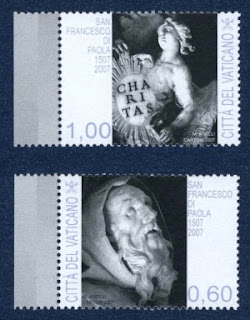
(2) This isn't technically in Italy, but we'll get there in a second. The Vatican City State has a new stamp--and not just any new stamp. This time the saint is from Calabria! Yeah! Go San Francesco di Paola!

For those who aren't up on Roman Catholic saints, Calabria's own Saint Francis is often overshadowed by Saint Francis of Assisi, the co-Patron Saint of Italy with Saint Catherine of Siena (although there is some debate on that, with Saint Joseph (father of Jesus) as the other contender).

Anyway, it's nice to see *our* Saint Francis being recognized. You can read more about the Patron Saint of Calabria and his stamp here.

Here's a preview:

st francis di paola
Gorgeous, no?

(3) And finally, guess who's invading the Bel Paese?
You'll never guess.


Or maybe you will.


Give up?


the evil empire...kidding (kind of)
This ABC article is actually from April 30 of this year, but I just saw it referenced here. Scary thing is that the article talks about the time frame of 24-36 months during which Starbucks plans to open branches in France, Germany, Spain, and (gulp) Italy.

Which means we're *that* much closer to no more of this in the morning:

cappuccino from image chef
Yeah right.

So now that I've touched on politics, religion, and coffee--three subjects guaranteed to get any Italian fired up (only calcio is missing!)--I'll leave you to your Saturday.

Hope it's as gorgeous as ours is here!

Labels: , ,


10 September 2007
into the heart of calabria:
benvenuti a badolato!

BBC map of Badolato, Calabria, ItalyReady for some history?

Badolato Basics

My village, the birthplace of my great-great-grandfather, is Badolato, and it's located between the Ionian Sea and the Serre Mountains in Calabria, the toe of Italy’s boot.

Badolato, the meaning of which is in dispute (sorry, only in Italian) was founded in 1080 by conqueror and first Duke of Calabria Robert Guiscard, who along with his brother, took over southern Italy and Sicily for the Normans around that time.

Like many villages of this period, Badolato was built on a hilltop about 5 kilometers from the sea with a good view of any approaching ships. Staying too close to the water was considered dangerous not only because of potential invasion--the southernmost part of the peninsula was the gateway to the entire territory now known as Italy and the rest of Europe--but also because of malaria, which was quite common as some of the area was swampland.

Badolato, Calabria, ItalyView of Badolato Superiore from the winding road leading up to the village.
My house is just below the church from this angle--
not the grand one, the next one down
(you can only see my balcony door and side window).
Sorry for the haze, but why yes, that is an olive tree on the lower left.


town crest of Badolato, Calabria, ItalyAnd so, Badolato was built as a walled city, encircled by stone and guarded by three watchtowers, one of which is still partially standing (below); the town crest (left) honors these watchtowers and the village's medieval history.

Old watchtower, Badolato, Calabria, Italy
Many of the original walls around the village as well as the old gates that sealed off the city from invaders also remain, but a castle on a hill that was once the town's centerpiece (thus the name of the main square Piazza Castello) had to be torn down in the 1970s for safety reasons. Previously, it had cast a shadow on all that was below it, as castles are wont to do.

The piazza is now alternately called Piazza Fosso--fosso referring to the huge hole left behind by removing the hill and castle (it didn't create a hole really, only leveled off the hill the castle had been on).

Piazza Castello, Badolato, Calabria, Italy
Political, social, and agricultural history

As rulers changed throughout southern Italy (German, French, Spanish, Turk, Austrian, Bourbon) Badolato felt each influence in turn, which you can hear in Badolatese, the main tongue spoken around here (a version of the Calabrian/Sicilian language, which some (mistakenly) call a dialect), and taste in the traditional Calabrian cuisine, noted for its fondness for the peperoncino, brought back to Italy by Columbus, although also widely used by Arabs who settled here.

Badolato soon became one of the most prominent and wealthiest cities in what is now southern Italy, swelling to a population of 8,000 (some estimates say up to 12,000) and boasting the palazzi of some of the most influential families in southern Europe, mostly due to production of olive oil, wine, and citrus fruit.

The family of the former baron of Badolato still owns a palazzo or two (although they don't live here full-time) as well as a grand villa that sits on a huge chunk of the land surrounding the village. Almost all of the land around Badolato is still farmed, including that of the former baron, but most of it is was broken into smaller plots as the feudal system died down around the turn of the 20th century.

Incidentally, on the bigger plots, some families built workhouses (no plumbing, electricity, etc.), but still today it is rare for Calabrians to consider actually living on that kind of open land (most prefer village life and traveling by car or by foot to their land). Indeed getting permits to build is difficult as the land is zoned agricultural. Unless it has some existing structure (at least the remains of a wall!), it's illegal to build a house on these land plots--which means no subdivisions in Calabria's future. No complaints here.

Religious heritage

Badolato’s importance and deep religious and spiritual history are represented by its 13 churches and 17th century Convento Santa Maria degli Angeli, once a monastery but now a drug and alcohol rehabilitation treatment center; residents produce their own food on site and even operate a restaurant.

Convento di Santa Maria degli Angeli, Badolato, Calabria, ItalyConvento nestled among olive trees
(You may remember this old monastery from the Easter procession)

Some say that it's possible that the Holy Grail was transported here and may still be buried underground somewhere. In 1070, a group of Calabrian monks went to France and established the Ordre de Sion, which later became the Priory of Sion of Dan Brown's Da Vinci Code fame--said to be the keepers of the Grail.

The Calabrian monks returned to Calabria in 1090 but no one knows what, if anything, they brought with them from France; could they have incorporated valuable Christian artifacts into the underground ducts and tunnels of a blossoming Catholic stronghold called Badolato?

Effects of emigration

Like many southern Italian towns, Badolato was a victim of emigration, largely abandoned during two major waves of flight: the first in the early twentieth century (when my family left) and the second after World War II.

Badolato door, Calabria, Italy
In both instances, emigrants were looking for better opportunities, but especially after the second World War when southern Italy was truly war-torn and downtrodden; my 82-year-old neighbor has sung for me a children's rhyme that complained to Il Duce, Benito Mussolini, that they were living the day without bread and the night without lights (u jornu senza pane, la notte senza luci). A flash flood that wiped out a part of the village in the 1950s surely made the decision to leave easier for many.

Badolatesi fled to, among other places, the United States, Canada, Argentina, Brazil, Germany, Switzerland, and Australia, many leaving behind their homes with only whatever they could carry, never to return.

Abandoned house, Badolato, Calabria, Italy
Others moved just down to the coast, where Badolato Marina was being built in the 1950s--living nearer to the water was now considered safe, plus coastal life was also more convenient with the railroad and highway running through there.

Badolato railroad, Calabria, Italy
Indeed, P's mom remembers where there wasn't even a paved road leading down from the mountain village to the sea--I've yet to walk the path, but it's still there--and anyway, there were only a handful of cars in the village even in to the 1960s, so you can that imagine folks tended to stay close to home.

Because of this mass emigration, the population of Badolato Superiore now stands at about 350 (total population with Badolato Marina is around 4000). This set-up is quite common throughout southern Italy, by the way, so that you'll often see a "Superiore" town up on the hill/mountain, and its counterpart closer to the sea with "Marina" or "Lido" after the name.

Badolato Marina, Calabria, ItalyBadolato Marina
(Sorry for the poor quality here; it's an old scanned photo of mine)

The Ship of Kurds

Badolato had fleeting hope of a boom just after Christmas 1997 when 825 Kurdish refugees landed on its shores; this made international news and you can read more about it here (the man on the left in the third photo is my vicino Giuseppe!).

The Badolato community welcomed the Kurds as potential workers and young revitalizers of the old town. The new immigrants are mostly gone now, though, either deported or having left for Germany, France, or elsewhere in the EU for work.

Still, Badolato remains one of the most involved immigration centers in all of Italy in so far as welcoming migrants and helping them with housing, health care, work, and psychological adjustment to life in a new country; one of my translation contracts with the local health care agency involves a special EU project to include cultural and linguistic mediators in this process.

Current and Future Badolato

And yet Badolato remains largely empty, like the village Farfallina wrote about, although the population swells enormously in August when many return to their hometown from Germany, northern Italy, etc., for ferie--Calabria, generally, is quite a hot spot for Italians and other Europeans looking for great, clean beaches.


Beach on Ionian Sea, Calabria, ItalyPhoto © Franco Muìa

Badolato is undergoing a revitalization, though, as there have already been quite a few properties sold to international buyers over the years; casa by casa things are looking more lived in, although I'm the only year-round foreigner who lives here (Badolatesi would say the transplants from Genoa, Naples, and elsewhere in Italy are also stranieri, but I'm the only non-native Italian).

There is a lot of potential here for tourism, as you can probably imagine, although there would need to be a lot of infrastructure work done first--getting here and getting around isn't always easy. No one wants to commercialize the town to the point that it's another Siena or Cortona, overrun with tourists, but a few more visitors, a few more people who want to experience the real Italy complete with women carrying baskets on their heads?

Well that would be nice.

We may not have much support from the government, but we do have green mountains, a clear blue sea, fresh mountain air and water, warm souls, and delicious, fresh food, and for me, that's certainly plenty.

Final Notes

For those of you who have made it this far (thank you!) and still want more, you can see more photos under the Scenes from Village Life label, my first Virtual Tour, and the two most recent posts: Destination Calabria: Photo Tour of a Medieval Village (Part I) and (Part II).

And if you want to plan a trip, just let me know!

Labels: , , ,


03 September 2007
STRIKE!
drop the tagliatelle & no one will get hurt

pasta by onio-n on flickrI've been away from here for a while, so you may be wondering what's going on in Italy.

Well right here in the Bel Paese where a third of citizens say they prefer a plate of spaghetti over sex, Italy's going on a pasta strike on September 13.

Seems impossible, insane even, but Italy's four largest consumer groups are stufi with the planned price hikes of electricity, gas, train service, bread, milk, school books, and, of course, pasta, and they feel that a strike on pastasciutta would be a symbolic demonstration of citizens' feelings on the matter.

Some say that these planned increases would cause Italian families to shell out another 1000 euros per year on such items, spending up to 25-30% more--a huge increase especially if you consider that the average monthly salary in Italy hovers around that magic 1000 euros mark.

Go ahead. Gasp.

We all know that Italians are famous for their strikes (I'm guessing more than a few of you reading this have been affected by one or another), but a "sciopero della pasta?"

Unheard of,
so you know this is serious.

Most Italians eat pasta every day, and some estimates say that an average Italian eats 54 kilos (119 pounds) of pasta per year--for some, as you can imagine, that's their own body weight or more.

The increasing price of wheat is really behind this, and it brings to mind Mexico's recent problems with the rising cost of corn to make its famous tortillas. What else is a nation to do when their food staple is threatened?

I have to say I think the Italians have a point here.

Now you may be worried about those Italians who might suffer the side effects of no pasta for a day, but don't worry--volunteers from the consumer groups will be handing out bread and milk throughout the country to assuage any pangs.

So if you'd like to support your Italian friends, just say no to buying or eating pasta on Thursday, September 13.

And an inside tip?

Start savoring that espresso, as it too has been the victim of a recent price increase.

And if you think Italians are protective over their pasta....

Labels: , , ,


10 August 2007
my italian vacation (sort of)
and your summer homework

Taking a cue from fellow Italy expat bloggers Shelley, Sara, Jessica, and Sara, I'm taking a little time off away from the blog.


I know this is odd for those of you in America, especially, to wrap your heads around, but here in Italy, just about everyone takes most if not all of August off. P and I aren't going anywhere since everyone comes to us (ah, living in southern Europe is so tough!), and in fact, we're both still working.

But we'll also be spending plenty of time with his 6 brothers and sisters and 16 (or is it 17?) nieces and nephews that are here right now, so I'm taking a break from posting for a little while.

I'll still be around visiting your blogs, though (can't keep me away if you tried!) and I may even pop in to say hello here, but while I'm gone I have some suggestions to keep you busy:

1. Head over to The Island Review, a great site for keeping up with all the contests and give-aways going on via the Internet, including a fabulous contest for digital camera lovers through PicaJet--you can win a PicaJet FX and/or RoboImport
!

What's all that you say? It's about making our digital photos the best they can be and also keeping them organized, so do click on the above links for more information. Hurry, ends August 15th!

FYI, the author, Kailani, is a dedicated mom, wife, and flight attendant who also writes An Island Life from her home base in Hawai'i. I know. I'd hate her too if she wasn't so damn sweet.

2. I've told you about the group She Who Blogs before, and now I'm going to send you to one of our most recent members' blogs: Model Behavior.

You should visit all the member blogs as they're all wonderful (seriously!), but when I clicked on this one, I wanted to read every post from the beginning. I think we all know that's a rare warm fuzzy in the blogosphere, so I wanted to pass it on to you.

3. Another of my recent discoveries is The Passionate Palate, and for those of you who enjoy a great food blog, this one is for you.

Jeni, the author, also runs Passionate Palate Tours, food and wine tours through Italy, and I've had great fun corresponding with her the past few days. Give her some comment and link love!

4. Check out a great post on work and life balance over at Writing, Work and Weasels, and for those of you who can read Italian, go read Audrissima's L'onestà, la bellezza nella semplicità e l'amore--and why not comment and tell them I sent you?

These are my favorite posts of the day so far, but the day is young, bloggers, so get writing!

I really *should* start posting my favorite posts every day...hmm...hello Google Reader? Something for me to think about over the break (while I am reading many, many books).

5. Spread the word about my Bella Bags E-Party and Contest on your own blog, then come back here and tell me (or email me) and I'll send you special link love when I return.

Woohoo! We're all winners!

There are so many more recommendations I have for you, and that's what I'll spend part of my vacation compiling, I promise.

See, I'll be thinking of you, so that makes it OK, right?

Here's your postcard in advance:

ionian sea in montepaone, calabria, italy
Hope all your days feel like this.

Labels: , , ,


07 August 2007
answering your questions: italy edition

Hey, remember when
JennieBoo tagged me with the eight things meme and you wrote in with your questions after I asked for help?

For those who haven't been following, go read parts one, two, and three of my answers to catch up because now we're on the fourth installment of responses...and I *still* won't have gotten to all the questions by the time I'm done here.

You are such an inquisitive bunch!

These questions all have to do with Italy in some way or another, so let's start with a photo to get us in the mood.

gulf of squillace, calabria, italy
Now settle in and get a cup of whatever it is will get you through this--it's a long one.

1. Sharon in Sicily asked me to name the strangest thing I've seen in everyday Italian life.

Oh where to begin? I'm going to go with something that truly baffles me and that no one has been able to adequately explain to me thus far.

Italians are notoriously obsessive about the cleanliness of the inside of their homes. So then why, oh why, is there so much litter, graffiti, and occasional bouts with garbage piles *outside* of them?

The juxtaposition of the two extremes is just...well...it's quite simply the strangest thing I have seen in everyday Italian life.

2. My Melange would like to know what my favorite spot in Italy is and where I'd like to go that I haven't yet been; in a related question, Kimberly wants to know where I'd suggest a first time overseas traveler head first.

You probably don't know this and maybe won't even believe it, but I'm not well-traveled within Italy at all--Calabria, yes, as I've seen everything in depth and many times (except the area around Cosenza--no offense to the Cosentini!). But I've never been to the biggies like Rome (gasp!) and Florence.

Wow. That felt like confession. I feel better now.

Anyway, right now, I'd have to say that my favorite spot in Italy is, well, home.

But a close second is Serra San Bruno, the site of an 11th century monastery nestled up in the Serra mountains (part of the Sila range) about 45 minutes away from me. It's a wooded area with walking trails and spots for picnics--there's even a little stream running through it. So peaceful and relaxing.

I also like Taormina in Sicily, which is gorgeous although quite touristy.

I've meant to travel more, I swear, but it's kind of expensive especially since I've been busy working to save up for various other things; travel just hasn't been a priority.

But on Kimberly's point, the first place we'll probably head once we get out and about is Rome--I think it's the most logical starting point for discovering Italy (but then I've never been very logical, which explains my roundabout route). Plus P's sister lives just outside the city, so that'll cut down on our costs.

3. Bec wants to know more about how long it took me to be fluent in Italian, or at least to be able to understand and respond.

First, as background for those who don't know--I came here without speaking Italian aside from "ciao" and some food words.

Now on becoming fluent, let me put it this way: the basics are easy, especially when you're immersed and don't have a choice but to learn, as was my situation. I went back to the US after six months here, and I was getting along just fine on a day to day basis by the time I left.

That said, four years later, I'm still not where I'd like to be, but I can hold my own in pretty much any situation. I think in Italian, dream in Italian, and often count in Italian, so I'd say I'm well on my way. What I need to do now is really study grammar and expand my vocabulary, and then I'll consider myself truly fluent.

I'd say it'll take a couple more years, though, because this, unfortunately, isn't much of a priority either. I've gotten a bit lazy, I'm afraid, and I'm quite happy to simply not struggle every day with easy things. When I'm ready for a challenge again, I'll pick up some books and study.

4. Stefania wanted to know if Italy's lifestyle really is more laid back and how I spend my days.

Great question, and I'm so glad you asked!

I live in a 350-person village in southern Italy, so yes, the lifestyle here *is* pretty laid back; people do things on their own time and when they want, thus our many expat complaints about lines at the post office and the doctor's office and not having our phone lines fixed for months.

That said, there are also cities in Italy, especially the farther north you go, that are very much like cities anywhere--a lot of rushing around and, unfortunately, a lot of stress. Our friend Michellanea is in Milano, and I think she'd be the first to tell you that she ain't taking afternoon naps and sipping limoncello all day.

Of course, neither am I, but I'm also not rushing around trying to get as much done in a day as possible--or having to cover great physical distances to get those things done (this is a general difference between city and rural life, I think, and not Italy-specific).

My average day? I do the same things as most everyone else only I work from home (except when I'm teaching) so I can schedule things when I want--some mornings I have errands, for example, and those are always more stressful than anything else I do. Other than that, I do yoga, take Luna on walks, work, get cappuccino at the bar with a friend, work, cook, eat, do laundry, clean, talk to my mom on the phone, blah blah blah.

Oh, and blog of course.

5. And finally, we have Anno:

It seems to me that there are so many romantic memoirs published about life in Italy (Eat Pray Love, which I Loved Loved Loved; and Under the Tuscan Sun); when you read these books, do you snort in derision, or is there something in them that still resonates with you?

This is a fabulous question. I'm laughing as I imagine my snorts of derision. I'll have to work on those--sounds like fun!

Hmm. How can I say this? There are some authors' styles that I appreciate more than others. Frances Mayes in Under the Tuscan Sun really pours it on; she's a flowery writer recounting the stresses of restoring a villa while she's in the US and trying to find creative ways to use all the wonderful flowers and vegetables in her Tuscan garden. She's half in the US and half out and obviously had a considerable amount of cash to work with.

Let's just say we didn't share the same experience.

That said, I didn't hate the book, and indeed, I found some passages that I liked enough to copy into my quote book such as:

Where you are is who you are. The further inside you the place moves, the more your identity is intertwined with it. Never casual, the choice of place is the choice of something you crave.

I identified with this sentiment as I read it during the year between when I decided to move here and when I did. So no snorts there.

On the other hand, I *really* enjoyed Eat, Pray, Love: One Woman's Search for Everything Across Italy, India and Indonesia by Elizabeth Gilbert, and yes, I keep promising a review, and it'll come at some point. I definitely recommend it as I enjoyed following Gilbert's journey, but interestingly, more on a spiritual level than anything.

Again, no snorting.

But I will say that if you want to read a spirited, down-to-earth "I moved to Italy" book, check out Extra Virgin: A Young Woman Discovers the Italian Riviera, Where Every Month is Enchanted by Annie Hawes.

Here are some of my favorite parts:

No matter how much you feel you're in the middle of nowhere around here, completely unobserved, you're sure to come across someone who saw exactly what you were up to--or who knows someone else who did.

Expats in small towns? You with me on this one?

I mentally take my hat off to whatever unbelievably desperate person first discovered the edibility of the olive--I'm sure I would have starved without ever guessing for a moment that the things weren't poisonous.

For those who don't know, raw olives aren't fit to be eaten--and if you don't believe me, you're welcome to try for yourself.

Lucy [Hawes' sister] and I are thinking longingly of a quiet place up a mountain, a place where people only speak one at a time, and in English. We need to rest our reeling brains.

Here here!

And finally, addressing a subject near and dear to my heart:

I, meanwhile, far from being modernized, have recently found myself being put through a typically Italian trauma...I have transmuted, inexplicably yet inexorably, from a signorina to a signora.

Perhaps I should explain that "signorina" means a young woman, and "signora," well, doesn't.

And that wraps up today's Italy Edition answers.

P.S. Figs Olives Wine--I haven't forgotten about your Italy-related question; I just have bigger plans for it.

P.P.S. If you haven't checked out the Bella Bags E-Party and Contest, get there! And do keep checking Bella Bags
because Marcía's adding new bags all the time.

Labels: , , , , ,


footer