03 January 2008
la musica calabrese
(calabrian folk music)

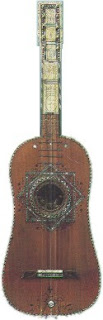
chitarra battenteOne of my favorite parts about living here is that you never know when you'll be caught up in an impromptu concerto. Seriously.

Now I'm sure some of you are thinking "Ah there goes another one of those stereotypes of 'la dolce vita' that simply doesn't exist in real life Italy."

Well I'm here to tell you that in small town Calabria, most males of all ages seem to play the guitar and will gladly break it out and start singing--especially the later into the evening it gets (and the more grappa that is flowing). And for those of you reading this who have visited here, chances are you can back me up on this.

In other words, we may miss out on a lot of "conveniences" down here, but at least we have la musica.

In fact the other night at New Year's Eve dinner, one of the younger boys who is just learning to play the chitarra battente (pictured at left) asked for some advice from Mimmo, our host and lead singer/guitar player of Marasà, a local band that performs traditional Calabrese music with a bit of an updated twist.

I just love how generation after generation picks up these songs and instruments with pride, keeping the tradition going, not feeling embarrassed or shy in the least as they sing along (loudly) when the guitar shows up.

For anyone who thinks that Calabrese music and Calabrese in general is dying out, here's a short clip of Mimmo encouraging yet another Calabrese boy on how to play the traditional way:


Although Italian musical heritage goes back centuries, including the famous chants of the Gregorian monks, Calabrian music has its own unique tradition and is rooted in songs about peasant life in the feudal system and all it entails--sung in Calabrese accompanied by Calabrian instruments.

It is music of the people, by the people, for the people, so to speak, and tells stories of both hope and hopelessness--common conflicting emotions for many Calabresi throughout the centuries.

Traditional Calabrian folk music has some common elements: high, strong vocals, a catchy, nearly hypnotic rhythm, and a bittersweet raw passion with any combination of tambourine, guitar, chitarra battente, accordion, zampogna (bagpipes), lira, mandolin, drums and more. The song rhythm you'll hear often is the tarantella, a traditional southern Italian folk dance that was performed by female victims of spider bites to rid themselves of the venom.

There's a great description of Calabrian music heritage here if you're interested, but I think George Gissing sums it up pretty well in his 1901 travel memoir:


Listen to a Calabrian peasant singing as he follows his oxen along the furrow,
or as he shakes the branches of his olive tree.
That wailing voice amid the ancient silence,

that long lament solacing ill-rewarded toil,

comes from the heart of Italy herself,

and wakes the memory of mankind.

For me, there's just nothing like that distinct Calabrese cry accompanied by the chitarra battente to take me back to when my ancestors walked these same streets, living much simpler yet much harder lives, imagining what they could offer their families if only they could get to l'America.

Goodness I wish I could go back and tell them.

You can hear more of Marasà here by clicking on "il disco" and then choosing songs. My favorites are Aquila bella, Canto ad aria, and Facci di n'ammendula and if you like bagpipes, be sure to check out A Nuziata.

If you'd like to order a Marasà CD of your very own, you know where to find me.

Labels: , , , ,


16 December 2007
snow in calabria!

"Amò! Guarda la neve!"

"Honey! Look at the snow!"

P opened the balcony shutters this morning and found that it's beginning to look a lot like Christmas--we got snooooooooow!


Snow on old monastery in Calabria, southern Italy
Don't you just love how at the bottom, the land around the olive trees is all green but then by the time your eyes reach the sky, everything turns all white?

Oh that Mother Nature . . . .

So, yes, it's just a dusting, but it's actually visible from my house; usually you have have to go farther up into the mountains before you hit the white stuff.

A lot of people don't know this, but there's actually some great skiing in Calabria (they tell me; I'm not a skier) in the Sila Mountains where you'll find the Sila National Park.


And yes, I know a lot of you are having blizzard or blizzard-like conditions right now, so this may not seem exciting (by the way, I do hope you're all safe and not throwing out your back shoveling), but for someone like me who despite now living in southern Italy grew up with

snow days
and school delays
and watching flakes fall in complete silence

and flapping my arms and legs to make snow angels
and sipping hot chocolate with marshmallow
while wet gloves, hats, scarves sizzle
and dry on the radiator


even a simple dusting can make my entire winter.

I love snow!

Snow on old monastery in Calabria, southern Italy
It's still raining and cold cold cold, but no worries, because I have a lot of this in store today (much like yesterday):


baking supplies
But I won't be lonely. Besides the pooches and remaining pups, I'll have P around as he's been enlisted to help (official nutcracker and crusher), and also this guy and his heavenly voice:

Harry Connick Jr., When My Heart Finds Christmas
Harry Connick Jr., Harry for the Holidays
Don't worry, I'll also make time to take Stella's cue and find a nice lap by the fire.

Stella on P's lap by the fire
Buona domenica!

P.S. Don't forget to vote for me in the Photo Contest at Write from Karen's Place! You can see my official entry with photo and story here.

Be advised: From the photo contest page, you need to click on "more at twiigs.com" to go to the actual voting page. Thanks!

Labels: , , ,


23 November 2007
we have blossoms!

While walking with the pooches yesterday morning, I came face to bark with a tree that had seemingly blossomed overnight. I certainly didn't remember it so full of life the day before. Where was I looking?

I don't know about the day before, but now I see a truly gorgeous tree with lovely thick, strong, furry leaves and sweet-smelling, bellissimi blossoms:

blossoming in Calabria, southern Italy
Anyone know or care to guess what kind of tree bears such blossoms?

I *know* some of you know.


blossoming in Calabria, southern Italy
30 days of thanks
Today I'm thankful for:

Citrus season! It's starting now and by Christmas, we'll be inundated with lemons, oranges, and clementines. And I love me some clementines.

Isn't Mother Nature wonderful that she gives us these sweet, juicy, bursting-with-color treats smack dab in the dead of winter?


Genius.

Labels: , , ,


03 November 2007
weather you like it or not

In case anyone doubts the fickleness of the weather in Calabria, I'm going to show you a little of what it was like here on Thursday, November 1.


From the time I woke up that morning, it had been pouring, buckets and buckets of water, so I hadn't paid much attention to the windows. But then, just as I was starting to think about lunch, a hint of sun glared through the balcony door.

Literally at that moment, P called me and told me to look outside.


11:45 a.m.:

rainbow in calabria
I've seen a lot of rainbows here, but never one this low; indeed, that's why P had called me--he hadn't either. And where he was at the time, he was nearly at the start (or end?) of it--my little pot o' gold!

11:47 a.m.:

rainbow in calabria
To be clear, these views are from my balcony, off to the left. To the right there is the sea, or at least that's what's usually there.

11:56 a.m.:

fog in calabria
We get a good amount of fog here throughout the fall and winter months, but I've never seen this much fog in the daytime. It rolled through quite quickly, though.

11:59 a.m.:

fog has cleared, calabria
At this point I thought we were finally, finally in for some afternoon sun, and we did have a good couple hours of the stuff, but then I looked out toward where the rainbow had been.

2:24 p.m.:

fog rolls back in, calabria
And it rained the rest of the afternoon and was cloudy and/or rained Friday. As I type this on Saturday morning, there's plenty of sun and not a cloud in sight, but I'm not placing any bets.

30 days of thanks
Today I am thankful for:


The sun and rain, the clouds and sky, the hail and snow, the wind and still air, the heat and cold--all of the natural weather elements that make the world go round, help our food to grow, make trees greener, and above all, keep life interesting.

Because who hasn't gotten caught in the rain? Or the wind? Or the snow? It's not always fun (although it can be!), but it's always an experience. You just can't help but feel alive when you're getting pelted in the face with hail, can you?

And besides, sometimes it's good to be reminded that the world does what it wants and we're just along for the ride. Weather you like it or not. Hah!

Labels: , , ,


30 October 2007
ghost stories...grab a flashlight!

As I’ve told you, my friend Tui of Mental Mosaic is organizing a Halloween-themed blog carnival:


I'm now late submitting this (sorry Tui!) but I've been trying to post this for three days--Internet problems AGAIN. I hope she'll still let me in!

I don't know how long this connection will last, but at this point, I have such low hopes for being able to get through NaBloPoMo. Keep your fingers crossed for good Telecom Italia vibes please!

Anyway, keeping with the Halloween theme, I also received word from somepinkflowers that there's a Halloween party going on over at Ghouls Just Wanna Have Fun, and I thought telling some ghost stories would be a fun way to particpate.


So here is my contribution to the Halloween festivities--three, three, three true creepy stories for the price of one!

I.

When I was a teenager, I used to joke with my family that there was a man living in my closet, which was really a cubby hole that ran the length of the top floor of the house on either side of the upstairs bedrooms. I used to hear strange noises, things shuffling, falling, just weird stuff that I was always a bit too afraid to investigate in the moment.

I really did think it was possible that someone could live in there, especially if he smuggled up food from the kitchen every now and again. Did I mention my grandmother was no longer so sensitive to small noises around the house after having as many as eight people living there at a time? Hell she might’ve even just thought it was the friend of a grandchild or something grabbing food if she saw him….

I didn’t go exploring in the cubby all that often anyway, and like any good storage space, blankets and pillows were part of the mess. The Man in the Closet would even have his choice of stuffed animals, so you know, it *was* possible that there was someone in there.

Well it was all a funny joke until one day my goddaughter, who was about two years old at the time, and I were up in my bedroom. She walked over to the cubby hole door and pulled it open, probably to get my old Barbies out or something.

With a loud bang, the door pulled back and slammed shut immediately (virtually impossible to occur on its own because of a really sticky door handle) and she was left standing there, staring at the closed door with an open mouth and wide eyes.

I grabbed her and ran downstairs (greeted by laughing family members, of course). She was too young to explain what happened, but I never did hear strange noises come out of there again.

II.

Switching locations to southern Italy, I had been in my house for a few months, just about that time when you’re used to all the natural noises a five-hundred-year-old house makes.

Well one November night, I heard footsteps on my wooden stairs, slow and steady, and heading toward my bedroom which is on the bottom floor of the three-story house. The stairs are connected by iron rails, so someone walking on them creates a very peculiar noise--the stomp against the wood, but also a ting because of the iron. I turned on the light but didn’t see anything, and eventually (eventually!) went back to sleep.

When I woke up the next morning, I was greeted by the top of a coffin propped against the house in front of me. My elderly neighbor had passed away during the night, and he was already set up in his house for a couple days of viewing before he would be buried.

I heard the footsteps for two more nights and haven’t since.

III.

This one is from a very good friend of mine here in the village who, trust me, isn’t one to normally believe in this kind of stuff, so I sure believe him.

When he was a teenager, he was hurrying to get home after a summer night out, and so was speeding up the winding road into the village on his motorino (like a Vespa). He saw a light flash before him on the otherwise pitch black night, and realized as he got closer that it was an old man holding an old-fashioned lantern standing right in his path.

He swerved at the last minute, but hit him anyway; his bike went one way and he went the other.

As he made his way back to the bike, he looked around for the man or the light or anything, but saw nothing. He thought that maybe the man had tumbled over the side of the road, panicked, and went home.

When he got up the next morning, he asked his grandmother about the news in the village, if anything had happened the night before, but there was nothing of interest.

Later, when he told others of his story, it turns out that plenty of people around here have seen that man with the lantern, lighting up the pitch black road for late travelers home--but no one knows who he is or why he hangs around.

Have any ghost stories you'd like to share?

Labels: , , ,


09 October 2007
well i love a rainy night,
such a beautiful sight

Ciao! I hope everyone had a nice weekend full of Internet connections!

Yes, we lost contact with the outside world (via computer) again on Sunday morning, and it lasted until yesterday evening--and this morning it has been so frustratingly slow to do anything. I'm not even sure if this is going to post when I'm done, but it's worth a shot.

To be clear, I'm not complaining because when I called the Internet provider, they told me it'd be fixed by giovedì mattina--Thursday morning. Look at Telecom coming through early! Miracles do happen!

So what caused the outage? Well, they can blame this:


But in reality, we lost the phone and internet before the *big* storms came--and they were big. Huge. Scary in fact, and they lasted most of the day Sunday and yesterday.

No complaints on the rain either as it's been so very long since we've had a good soaking, although I could do without the lightning and thunder. I think the pooches, though trembling, secretly enjoyed it all because it meant plenty of Mommy Lap time--Luna on the upper half, Stella on the lower as we stared off into the fog, clouds, and rain (no television allowed when there's lightning!).

So, forced to stay inside, we did a little of this:


Which eventually led to this:


Those are pieces of one of our chickens marinated in olive oil, red wine vinegar, and Stubb's Rosemary-Ginger Spice Rub (sent by my mom) and then basted by P using a brush made of his mother's dried oregano. Yum!

Great family and food time aside, I also got *a lot* of other things done--finished all the translations that were piled up, completed another couple writing assignments, wrote a handful of blog posts, and ran a bunch of errands (in between the raindrops of course). I haven't felt so accomplished in weeks!

I love the rain! Especially when it's followed by this:


And, in case you're wondering, now we're back to this:


And how was your weekend?

P.S. Thanks so much for turning the last post into a wonderful discussion! You have no idea how happy it makes me when that happens.

Labels: , , , , , ,


02 October 2007
i'm so vain
(i probably think this post is about me)

Last Friday, I was in the Marina thinking about how long I'd have to wait for a bus to get back up the mountain when I wandered by a hair salon run by the wife of one of P's friends. I've never gone to her and, in fact, always felt a little guilty whenever I saw her because of it.


It so happened that two young guys from the village were getting haircuts there, and one offered me a ride if I wanted to wait. So I waited for them, figuring the bus would take much longer to arrive.

And then I felt guiltier and guiltier about never going there for my haircuts the longer I sat there.

So at the last snip, I worked up all the nerve I had and asked Giovanna if I could make an appointment with her and made a decision on the spot to not only cut, but color. I've never colored my hair before (some highlights, yes, but not in years--and not in Italy), but the little white ones were really just starting to annoy me far too much.

Plus my birthday's coming up, so I thought I'd treat myself to some "me" time and count this as my present to myself.

Now you're all dying to know how it turned out, right? Well humor me anyway.

Yesterday morning I looked like this:

me (before)
Now I look like this:

me (after)
I love the color, love the cut, and now I even have some private English lessons lined up as a result of finally going to see Giovanna. Turns out she wanted to ask me about them the previous day I was there but was too shy to ask. Seems we have at least one thing in common.

And? You want to know how much it set me back? Wash, cut, color, and style (including blowing out my not-so-straight-hair)?

Come on.

Guess.

Thirty euros ($42).

Happy early birthday to me!

Labels: ,


26 September 2007
what's cooking wednesday: pasta all'amatriciana

Just in time for our cooler, rainier autumn days, today's What's Cooking Wednesday is simple, stick to your ribs goodness--Pasta all'Amatriciana, so named because it hails from a town called Amatrice, outside of Rome.

What follows is our interpretation of this recipe in my house. We use penne instead of the traditional bucatini, but we do use
pancetta arrotolata like most recipes for this call for. Oh and we add just a touch of garlic.

What's
pancetta arrotolata you say? Well, it's just rolled pancetta, and it looks like this:

pancetta arrotolata
You can read more about it here, but now I'm going to tell that we, lovers of all things spicy, don't actually add any of our wonderful peperoncino to this dish--we just buy the spicy pancetta instead. See that reddish orange tint inside the rolls? That's hot, and by that I mean piccante and not Paris Hilton-y.

As a substitute meat, you can use anything similar--we also prepare this recipe with Calabria's most famous salami, soppressata, or even capicollo (and then add peperoncino). Just keep it chunky and spicy, and yum.

We're lucky here in Calabria since its tradition of curing meats dates back to the days when Greeks first colonized this area--we're talking B.C. So yes, they know what they're doing, and the results are always fabulous.

For those of you lucky enough to be near an Italian market, do make the effort to seek out some of these meats. They're great in antipasti and also as ingredients in a wide variety of dishes.

Like many Calabrian-Americans, we always had soppressata in our basement in America--my grandfather (non-Italian!), father, and brother would make them and we'd dig in for a Christmas-time treat. Sliced reeeeally thin with some fresh bread is my favorite. Anyone else?

Interestingly but not surprisingly, the local butcher who provides the spice mix to make the "soupies" as we called them (among Calabrians, "soppressata" becomes "suppressata," and Americans love to make little nicknames, right?) has origins in Isca, which I wrote about yesterday.

So you see, I was also lucky in America.

Pasta all'Amatriciana

pasta all'amatriciana
2 tablespoons olive oil
1 small onion, diced
1 garlic clove, diced

100 grams pancetta arrotolata,
unrolled and cut into bite-sized chunks
1 tablespoon freshly chopped parsley
1 can peeled tomatoes
500 grams penne pasta
water and salt to boil pasta
grated pecorino romano cheese to garnish

First put on the water to boil for the pasta, and then chop all your ingredients as described above.

Put olive oil in skillet and heat on medium. Add pancetta, and let cook for about five minutes, until the pancetta renders its fat. I know, yum, right?

Then add the onions and cook until translucent. Add garlic and parsley and let cook for another minute or so.

At this point, your water should be boiling, and you can add salt and the pasta to the water (or do this whenever your water *is* boiling after this point).

Now add the tomatoes to the skillet. You can run them through a grinder or roughly chop them first depending on how you like them. You can also add some of the pasta water to thin out the sauce a bit; I usually use about 1/4 cup.

Let the sauce simmer for about 1o minutes or until the tomatoes taste done to you. You can add salt, but do so sparingly because the pancetta is salty and you've also added salted pasta water.

When the pasta is just short of al dente, remove, strain, and combine well with the completely cooked sauce, still over medium heat.

Once the pasta has absorbed some of the sauce and become fully al dente, remove and serve immediately. Garnish with grated pecorino romano cheese.

A note:
Don't worry if your timing isn't exact the first time you make this--it'll get easier the more you make it, which is only more incentive to keep pancetta in your fridge.

Buon appetito!

Labels: , ,


25 September 2007
my great-grandmother's village:
isca sull'ionio, calabria, italy

Last week, my grandmother's first cousin, Domenica (but don't call her that--she goes by Marie) from America and her childhood friend, Laura, came to visit me. Both of their mothers, as well as my grandmother's mother Concetta, were born in Isca sull'Ionio, or Isca on the Ionian Sea, which is the village next to mine.

Meet Concetta via her 1941 US citizenship certificate:

Great-grandmother's US Citizenship Certificate
To explain a bit, my great-grandfather was from the village I now live in, and he married a woman from Isca, and that's where they had their children. So my roots, as well as those of my Marie are actually from both villages. Laura's family is all from Isca.

Isca sull'Ionio, Calabria, Italy
The connection between this tiny village on the Ionian coast and my area back home in Pennsylvania is extremely strong; indeed, most of the Italian (Calabrian) families in and around my hometown come from this village and share names like Varano, Scicchitano, Bressi, Feudale, Mirarchi, and Nestico (here, it's Nesticò, accent on the last syllable).

One of my most vivid memories of the first time I visited here was my jaw continually dropping at just how many last names I saw on signs and businesses that were so very familiar to me--even the geographical position of Isca is very much like our towns nestled into the Appalachian Mountains.

Isca sull'Ionio, Calabria, Italy
You can read more about Isca's history and links in the United States on this site, made by a friend of mine that I met via the Internet quite a few years ago. He ended up connecting me with a woman originally from Isca who now lives in South Philly (I also lived in Philly at the time); it turns out that she had also lived up in my area of Pennsylvania...and, as we discovered once we got talking, had even worked with my grandmother in a sewing factory in the 1960s or 70s.

Talk about a small world, huh?

Alida gave me one of the best quotes ever during an email exchange four years ago, and I hope she doesn't mind my sharing it here:
When I was a little girl, before I knew of the rotation of the earth, I really believed that those pretty mountains ate the sun and by a miracle God would send it back the following day.
Don't you just love Italians?

A few years ago, Alida, her family, my mom and I went to the San Marziale festival, organized by Iscatani, in South Philly together.

Festa di San Marziale, Philadelphia, Pennsylvania, USA
Now back to our visit to Isca with my cousin. Through genealogical research, I was able to pinpoint the street, although not the exact house, of our family. It's called Via Borgo, and here's Marie in front of the entrance to the smallest "street" I've ever seen in my life:

Via Borgo, Isca sull'Ionio, Calabria, Italy
Here's a look down said street:

Via Borgo, Isca sull'Ionio, Calabria, Italy
As you can see, there's actually a bit of reconstruction going on, but Isca Superiore is still mostly emptied out, even more so than my village; in fact, every time we asked about someone who had formerly lived up there, we were directed to the Marina village. Isca was particularly hard hit by an earthquake in 1947, so that was the impetus for many to get off the hill.

We didn't have too much time to walk around Isca, but here are some old scanned photos of mine from a previous visit:

Piazza di Isca sull'Ionio, Calabria, Italy
Isca sull'Ionio, Calabria, Italy
Then we went back to P's parents' house in Badolato Marina and enjoyed a lovely lunch with them. Here are P's father Salvatore, P's mom Caterina, Marie (eyes closed, sorry--told her to leave on her sunglasses!), and Laura.

Badolato Marina, Calabria, Italy
Marie had a great time trying to teach P's dad some English words--much laughter ensued as "I looooooove you" repeatedly echoed throughout the Marina. And since I never tire of hearing old family stories, this provided yet another opportunity for Marie to share what she remembers of her grandparents--my great-great-grandparents--and others long gone.

P's mom must've been feeling a bit nostalgic too because she broke out her old photos; I had never seen a baby picture of P before, so that was extra special. What a cutie! You may or may not see said photos scanned here at some point. Good thing he doesn't read the blog, eh?

So after quite a day full of emotion, laughter, great food, and fun, Marie, Laura and I headed back up the mountain to Badolato. As they rested, I got to thinking, as I'm wont to do.

I have always thought of Isca as representing the feminine side of my Italian family, as my great-grandmother and great-great-grandmother were born there--who knows how far back that goes, but I'd sure like to find out. Even the town's name ends in "a" denoting the feminine. I've always had a stronger connection with the women in my family, and so I would've guessed that Isca was the place for me if I were going to settle in Calabria.

But there's so much more to me than that feminine side, and I'd say I'm pretty balanced in my traditionally masculine and feminine influences. I'm not a girly-girl by any means, and you couldn't tear me away from a football, baseball, or basketball game in America if you tried. I can also be awfully aggressive when I want/need to be (do you believe me?).

Interesting, then, that it's my great-great-grandfather who was born in Badolato (note that it ends in an "o" denoting masculine) and relocated to Isca for his wife; I, on the other hand, was first drawn to Isca (my family had never heard of Badolato until I found some citizenship records), but then the pull to Badolato was so strong that I ended up staying here, in the masculine village, if you will.

And here I found my P.

Now I struggle to balance those masculine and feminine influences once again--this time in a culture with fairly distinct gender roles. Southern Italy isn't what you'd call modernized in its ideas about what a woman and a man should do. Lucky for me that I've found a guy who loves that I work and that I actually *want* to go hunting for mushrooms in the mountains, etc., with the boys--and he also happens to be a great cook who occasionally surprises me with his housekeeping abilities.

It's not always easy, of course, but I'm loving the challenge.

Labels: , , ,


20 September 2007
an abundance of love

So much love around here these days, I just have to share it.

For the past few days, my grandmother's first cousin from America has been visiting with her childhood friend who also happens to have roots here. This was the first time either of them had visited the birthplace of their mothers, and it was such a pleasure to be able to share my new (to them) Italian life.

Together, we spent time with P and his parents and talked about old family memories, all while looking at old black and white photos that I had never seen (which may explain my recent obsession with the colorless versions of my own pictures)...and also never-before-seen-by-me footage of P as a baby and young lad. Too cute!

I'll be able to share more of our time together as photos become available (I borrowed a digital but not the cable to upload--argh!), so in the meantime, you'll just have to accept some other images of love that I captured recently.

I almost stepped on this heart in the pavement of a nearby agriturismo
(but instead stopped to take a photo).

heart in the cobblestone
And there's just nothing like sisterly love.

luna e stella
Happy Love Thursday everyone!

Labels: , , ,


19 September 2007
what's cooking wednesday:
hummus for the tahini-less

Today's What's Cooking Wednesday has little to do with Italian food except for the fact that one of the usual main ingredients of hummus can be difficult to find for some of us in Italy.

When Sharon of Respiri Di Vita posted a recipe for tahini-less hummus last week, I was pretty sure this would quickly become a staple in my house.

And it has, so I'm sharing it with all of you because I love it *that* much. This is word-for-word from Sharon's recipe as there's nothing I would change even a bit. That's even her pretty photo!

Sharon posted a week full of quick, delicious recipes recently, so do go have a look.

Hummus Without Tahini

hummus without tahini
1 16 oz can of chickpeas or garbanzo beans
1/4 cup liquid from can of chickpeas
3-5 tablespoons lemon juice (depending on taste)
1 tablespoon peanut butter
2 cloves garlic, crushed
1/2 teaspoon salt
2 tablespoons olive oil

Drain chickpeas and set aside liquid from can. Combine remaining ingredients in blender or food processor. Add 1/4 cup of liquid from chickpeas. Blend for 3-5 minutes on low until thoroughly mixed and smooth. Taste and adjust to your liking.

Peanut butter, by the way, is now pretty easy to find around here whereas at one time, there was no hope. Of course it costs about 5 euros (7 US dollars) for a small jar, so I always welcome peanut butter donations from my family and friends.

I don't know if it was Sharon's own idea to substitute peanut butter for tahini, but it was certainly she who opened up the world of hummus for me in Italy. And I will always be grateful.

Grazie mille Sharon, e buon appetito a tutti!

Labels: , ,


14 September 2007
britney spears & shameless self-promotion

For some Friday fun, click here to read


as composed by none other than...me (there's the shameless self promotion part).

Come on. You know you're dying to know what *that's* all about.

And here's another photo of my village from the archives.

through the lemon tree
Buon weekend y'all!
(That was for Brit.)

Labels: , ,


12 September 2007
what's cooking wednesday: calabrian stuffed eggplant

Eggplant by Gare and Kitty on FlickrIt's about that time when melanzane (eggplants or aubergines) are everywhere I look, so I'm passing along one of my favorite ways to prepare them.

I'm not going to lie to you. I would never have even attempted to do anything with eggplant when I lived in America. I just wasn't brought up with it, although maybe I had it once in an eggplant parmesan or something. Obviously it didn't leave much of an impression if I did.

Now I'll eat these pretty purple fruits any way imaginable: grilled, in a sauce, baked, or as today's What's Cooking Wednesday, stuffed.

Combine my love for stuffed eggplant with the fact that tomorrow we're on Spaghetti Strike, and I thought that this would be a good recipe to get you through the pasta-less day. I'm giving you time to buy ingredients, you see--for buying and storing tips, go here.

The eggplant is a member of the nightshade family closely related to the tomato, and just like it's red, juicy, fruit of a cousin, it, too, was at one time considered poisonous. In fact, the Italian name "melanzana" is said to come from the Latin "mela insana," or poisonous (literally unhealthy) apple.

The eggplant isn't native to these parts, though, as it originated in India and arrived in Italy with the Arabs during the Middle Ages. Since then, Calabrians have been throwing them in just about every dish imaginable--always with delicious results.


One of my very favorite things that P's mom makes is melanzane ripiene--and as P will be the first to tell you, the traditional, old school Calabrese way is decidedly *without* meat, so that's what we'll be doing today. Also, frying is the usual method around here, although of course you can also make these baked.


I must note that in researching this post, I came across a version by Cream Puffs in Venice that is quite similar to P's mom's recipe--I don't know the exact Italian heritage of Ivonne, the author of that gorgeous, mouth-watering blog, but from this recipe, it's obvious to me that her mom has ties to the "toe."

Viva la Calabria!

Stuffed Eggplant
(Melanzane Ripiene)

Stuffed Eggplant8 small (size of your hand or smaller) eggplants
1 cup unseasoned breadcrumbs
1 1/4 cup grated pecorino or parmigiano cheese
About a handful of cubed provolone
2 eggs
1 large clove garlic, minced
1/4 cup basil, chopped
salt to taste
oil for frying


Wash and dry them and cut them in half length-wise.

Although in Ivonne's recipe, the directions are to boil the eggplants as one piece, P's mom does them in parts. So, from the raw eggplant halves, cut out the flesh being careful not to come too close to the skin, in fact leaving about 1/8 inch of flesh attached to it.

Boil the skins for about 5 minutes until just tender and then transfer to strainer. After a few minutes, place skins on paper towels, open-side down, until ready to use again.

Meanwhile, chop the flesh of the eggplant into very small pieces and then boil for about 5 minutes, also until tender. Transfer to strainer, and be sure to squeeze out excess water well.

In a mixing bowl, put breadcrumbs, cheese, eggs, garlic, basil, and salt with the eggplant flesh and mix well. Try a little bit of the mix to make sure the seasoning, especially salt, is OK.

Now take the eggplant shells and poke gently with a fork in a few spots; P's mom says so this is so the eggplants don't explode while frying. I'd rather not see that happen, so I do it too.

Lightly salt the eggplant shells and then fill them with the mixture; you may have to spread out the filling a bit to be sure it reaches all ends of the shell. Before you pack it all in though, tuck a cube or two of provolone into the stuffing of each eggplant. P's mom says this helps things stay together. Again, I'm a fan of that, so I do it too.

FYI, you want the filling so that it's fairly level with the shell, a little domed on the top.

Now you're ready to fry, so heat up about an inch of your favorite frying oil (P's mom uses olive oil but vegetable would work too). Once hot, put the eggplants in stuffing-side up. Fry for about 5 minutes or until golden brown, flip, and then fry the other side for a few minutes as well.

Remove from oil and drain on paper towels.

At this point, you can put these in a tomato-based sauce if you like, but we like to just eat them this way--and usually with our hands like good old-fashioned street food, only at home.

It's a lot of work to be sure, but it's *so* worth it.

Buon appetito!

*About the photos:

The first photo is used under a Creative Commons License from Gare and Kitty's photostream on Flickr. The second is mine all mine taken with a web cam (thus the less than stellar quality). Forgive me, please, but things will get better soon. I found out yesterday that I have a Camera Fairy!

Labels: , ,


10 September 2007
into the heart of calabria:
benvenuti a badolato!

BBC map of Badolato, Calabria, ItalyReady for some history?

Badolato Basics

My village, the birthplace of my great-great-grandfather, is Badolato, and it's located between the Ionian Sea and the Serre Mountains in Calabria, the toe of Italy’s boot.

Badolato, the meaning of which is in dispute (sorry, only in Italian) was founded in 1080 by conqueror and first Duke of Calabria Robert Guiscard, who along with his brother, took over southern Italy and Sicily for the Normans around that time.

Like many villages of this period, Badolato was built on a hilltop about 5 kilometers from the sea with a good view of any approaching ships. Staying too close to the water was considered dangerous not only because of potential invasion--the southernmost part of the peninsula was the gateway to the entire territory now known as Italy and the rest of Europe--but also because of malaria, which was quite common as some of the area was swampland.

Badolato, Calabria, ItalyView of Badolato Superiore from the winding road leading up to the village.
My house is just below the church from this angle--
not the grand one, the next one down
(you can only see my balcony door and side window).
Sorry for the haze, but why yes, that is an olive tree on the lower left.


town crest of Badolato, Calabria, ItalyAnd so, Badolato was built as a walled city, encircled by stone and guarded by three watchtowers, one of which is still partially standing (below); the town crest (left) honors these watchtowers and the village's medieval history.

Old watchtower, Badolato, Calabria, Italy
Many of the original walls around the village as well as the old gates that sealed off the city from invaders also remain, but a castle on a hill that was once the town's centerpiece (thus the name of the main square Piazza Castello) had to be torn down in the 1970s for safety reasons. Previously, it had cast a shadow on all that was below it, as castles are wont to do.

The piazza is now alternately called Piazza Fosso--fosso referring to the huge hole left behind by removing the hill and castle (it didn't create a hole really, only leveled off the hill the castle had been on).

Piazza Castello, Badolato, Calabria, Italy
Political, social, and agricultural history

As rulers changed throughout southern Italy (German, French, Spanish, Turk, Austrian, Bourbon) Badolato felt each influence in turn, which you can hear in Badolatese, the main tongue spoken around here (a version of the Calabrian/Sicilian language, which some (mistakenly) call a dialect), and taste in the traditional Calabrian cuisine, noted for its fondness for the peperoncino, brought back to Italy by Columbus, although also widely used by Arabs who settled here.

Badolato soon became one of the most prominent and wealthiest cities in what is now southern Italy, swelling to a population of 8,000 (some estimates say up to 12,000) and boasting the palazzi of some of the most influential families in southern Europe, mostly due to production of olive oil, wine, and citrus fruit.

The family of the former baron of Badolato still owns a palazzo or two (although they don't live here full-time) as well as a grand villa that sits on a huge chunk of the land surrounding the village. Almost all of the land around Badolato is still farmed, including that of the former baron, but most of it is was broken into smaller plots as the feudal system died down around the turn of the 20th century.

Incidentally, on the bigger plots, some families built workhouses (no plumbing, electricity, etc.), but still today it is rare for Calabrians to consider actually living on that kind of open land (most prefer village life and traveling by car or by foot to their land). Indeed getting permits to build is difficult as the land is zoned agricultural. Unless it has some existing structure (at least the remains of a wall!), it's illegal to build a house on these land plots--which means no subdivisions in Calabria's future. No complaints here.

Religious heritage

Badolato’s importance and deep religious and spiritual history are represented by its 13 churches and 17th century Convento Santa Maria degli Angeli, once a monastery but now a drug and alcohol rehabilitation treatment center; residents produce their own food on site and even operate a restaurant.

Convento di Santa Maria degli Angeli, Badolato, Calabria, ItalyConvento nestled among olive trees
(You may remember this old monastery from the Easter procession)

Some say that it's possible that the Holy Grail was transported here and may still be buried underground somewhere. In 1070, a group of Calabrian monks went to France and established the Ordre de Sion, which later became the Priory of Sion of Dan Brown's Da Vinci Code fame--said to be the keepers of the Grail.

The Calabrian monks returned to Calabria in 1090 but no one knows what, if anything, they brought with them from France; could they have incorporated valuable Christian artifacts into the underground ducts and tunnels of a blossoming Catholic stronghold called Badolato?

Effects of emigration

Like many southern Italian towns, Badolato was a victim of emigration, largely abandoned during two major waves of flight: the first in the early twentieth century (when my family left) and the second after World War II.

Badolato door, Calabria, Italy
In both instances, emigrants were looking for better opportunities, but especially after the second World War when southern Italy was truly war-torn and downtrodden; my 82-year-old neighbor has sung for me a children's rhyme that complained to Il Duce, Benito Mussolini, that they were living the day without bread and the night without lights (u jornu senza pane, la notte senza luci). A flash flood that wiped out a part of the village in the 1950s surely made the decision to leave easier for many.

Badolatesi fled to, among other places, the United States, Canada, Argentina, Brazil, Germany, Switzerland, and Australia, many leaving behind their homes with only whatever they could carry, never to return.

Abandoned house, Badolato, Calabria, Italy
Others moved just down to the coast, where Badolato Marina was being built in the 1950s--living nearer to the water was now considered safe, plus coastal life was also more convenient with the railroad and highway running through there.

Badolato railroad, Calabria, Italy
Indeed, P's mom remembers where there wasn't even a paved road leading down from the mountain village to the sea--I've yet to walk the path, but it's still there--and anyway, there were only a handful of cars in the village even in to the 1960s, so you can that imagine folks tended to stay close to home.

Because of this mass emigration, the population of Badolato Superiore now stands at about 350 (total population with Badolato Marina is around 4000). This set-up is quite common throughout southern Italy, by the way, so that you'll often see a "Superiore" town up on the hill/mountain, and its counterpart closer to the sea with "Marina" or "Lido" after the name.

Badolato Marina, Calabria, ItalyBadolato Marina
(Sorry for the poor quality here; it's an old scanned photo of mine)

The Ship of Kurds

Badolato had fleeting hope of a boom just after Christmas 1997 when 825 Kurdish refugees landed on its shores; this made international news and you can read more about it here (the man on the left in the third photo is my vicino Giuseppe!).

The Badolato community welcomed the Kurds as potential workers and young revitalizers of the old town. The new immigrants are mostly gone now, though, either deported or having left for Germany, France, or elsewhere in the EU for work.

Still, Badolato remains one of the most involved immigration centers in all of Italy in so far as welcoming migrants and helping them with housing, health care, work, and psychological adjustment to life in a new country; one of my translation contracts with the local health care agency involves a special EU project to include cultural and linguistic mediators in this process.

Current and Future Badolato

And yet Badolato remains largely empty, like the village Farfallina wrote about, although the population swells enormously in August when many return to their hometown from Germany, northern Italy, etc., for ferie--Calabria, generally, is quite a hot spot for Italians and other Europeans looking for great, clean beaches.


Beach on Ionian Sea, Calabria, ItalyPhoto © Franco Muìa

Badolato is undergoing a revitalization, though, as there have already been quite a few properties sold to international buyers over the years; casa by casa things are looking more lived in, although I'm the only year-round foreigner who lives here (Badolatesi would say the transplants from Genoa, Naples, and elsewhere in Italy are also stranieri, but I'm the only non-native Italian).

There is a lot of potential here for tourism, as you can probably imagine, although there would need to be a lot of infrastructure work done first--getting here and getting around isn't always easy. No one wants to commercialize the town to the point that it's another Siena or Cortona, overrun with tourists, but a few more visitors, a few more people who want to experience the real Italy complete with women carrying baskets on their heads?

Well that would be nice.

We may not have much support from the government, but we do have green mountains, a clear blue sea, fresh mountain air and water, warm souls, and delicious, fresh food, and for me, that's certainly plenty.

Final Notes

For those of you who have made it this far (thank you!) and still want more, you can see more photos under the Scenes from Village Life label, my first Virtual Tour, and the two most recent posts: Destination Calabria: Photo Tour of a Medieval Village (Part I) and (Part II).

And if you want to plan a trip, just let me know!

Labels: , , ,


footer
